
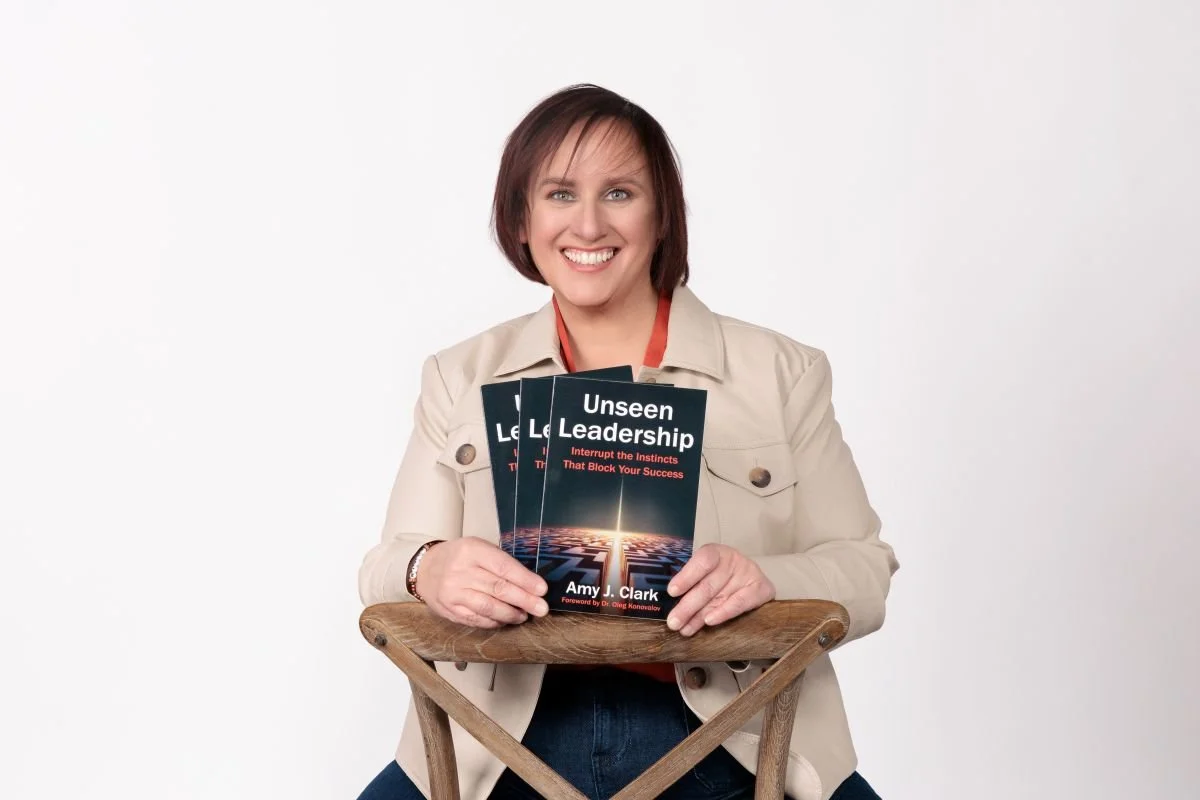
Unseen Leadership experiences
Build more ownership, faster decisions, and stronger leadership capacity.
Unseen Leadership Experiences help executives and leadership teams reduce decision bottlenecks, strengthen enterprise ownership, and build the capacity to lead through change without relying on the same few people to carry more.
Through keynotes, facilitated team experiences, and the CARE Leadership Activator®, leaders identify the instincts shaping how work moves through the organization and practice more effective ways to lead when the stakes are high.
For executive teams, leadership offsites, retreats, and development sessions.
Is this the room you are walking into?
“I have 100 leaders in a room for one day a year. I cannot afford it to be a ‘nice’ day.”
“We’ve done inspiring. Nothing was different on Monday.”
“Our leadership program teaches skills. Skills aren’t what’s failing.”
“I need every leader to understand what's changing, not just the ten I can afford to coach.”
“The last speaker was excellent. I still couldn’t tell you what changed.”
Unseen Leadership Experiences are designed to create movement, not just a good day in the room.
Unseen Leadership Experiences
it
Interrupt the Instincts That block your success
A story-driven and interactive keynote that helps leaders recognize when the instincts that made them successful are now slowing decisions, limiting ownership, and concentrating too much capacity at the top.
Leaders leave with a practical way to interrupt those patterns and lead with greater judgment, adaptability, and enterprise impact.
Best for: Leadership conferences, executive offsites, annual leadership meetings, company-wide leadership events, and organizations navigating growth, change, or rising complexity.
instincts under pressure
A facilitated leadership team experience that reveals how familiar instincts shape decisions, ownership, and behavior when the stakes are high.
Using the CARE Leadership Activator® and realistic business situations, leaders identify the patterns they rely on under pressure, where those patterns are helping or costing the team, and how to respond with greater Curiosity, Adaptability, Resilience, and Empathy.
Best for leadership development, retreats, and teams wanting greater self-awareness and better decision behavior.
the edge of familiarity
A facilitated team experience for moments when the business is changing faster than the leadership habits that built it.
Leaders identify what should be preserved, where familiarity is shaping decisions, and what the next stage of the business now requires from them so the team can move through change with greater clarity, adaptability, and shared confidence.
Best for growth, transformation, new strategy, restructuring, or significant change.
from expert team to enterprise team
A facilitated executive team experience that helps highly capable functional leaders operate with greater enterprise ownership and less dependence on a few key people.
Leaders examine how expertise, control, and decision habits shape authority across the business, where ownership is getting pulled upward, and what leadership capacity must exist beyond the team for the organization to scale.
Best for leaders asking: How do we stop acting like a collection of functional leaders and build enterprise capacity?
Online or in person. Availability and fee on request.
Why this is not optional anymore
The business environment is moving faster than many leadership habits were built for.
Decisions are more complex. Technology is accelerating the pace of work. Expertise is more distributed. Teams are being asked to move faster with less certainty, while senior leaders remain accountable for outcomes they cannot control directly.
That changes what strong leadership requires.
Organizations cannot afford for every consequential decision to travel upward, for a few capable leaders to carry too much of the business, or for yesterday’s experience to become the default answer to today’s problems.
Capacity gets spent rather than built. Leadership capacity is now a business capacity issue.
The organizations that scale well will be the ones that build more judgment, ownership, adaptability, and decision capability across the leadership system, not just at the top.
What the unseen work actually is
Four capacities that expand what leaders can handle
CARE is the practical response inside Unseen Leadership.
Curiosity. Adaptability. Resilience. Empathy.
Each is a human capacity. Each also has a direct business consequence.
Curiosity keeps leaders from solving the wrong problem with increasing efficiency. It widens the questions being asked before experience becomes the answer.
Adaptability helps leaders recognize when the conditions have changed and adjust how they lead, decide, and deploy resources before the business pays for a slower response.
Resilience expands what leaders and organizations can sustain without building the business around a few people who continually carry more.
Empathy gives leaders access to information that does not always appear in the data: how decisions will land, what people are experiencing, where resistance is forming, and what the organization can realistically absorb.
Together, these capacities help leaders interrupt familiar instincts when the situation requires something different.
What the room leaves with
-
A hundred people do not leave with the same takeaway. Each one leaves with the specific pattern they run, in language they will recognize the next time it happens.
-
Where this organization is Activated and where it is Building, by capacity and by layer. That measurement has not existed for you before, and it is yours after the day. Re-run it in twelve months and you have a trend line on the one asset you have been managing without data.
-
When a hundred leaders can name the same four instincts, a correction that used to require a conversation takes a sentence.
-
The test of this day is not the room. It is the first decision afterward where someone catches their own instinct before it costs anything.
-
Every attendee has now seen their own pattern. The ones carrying the most complexity are the ones you will want to go further with, and after this you know who they are.
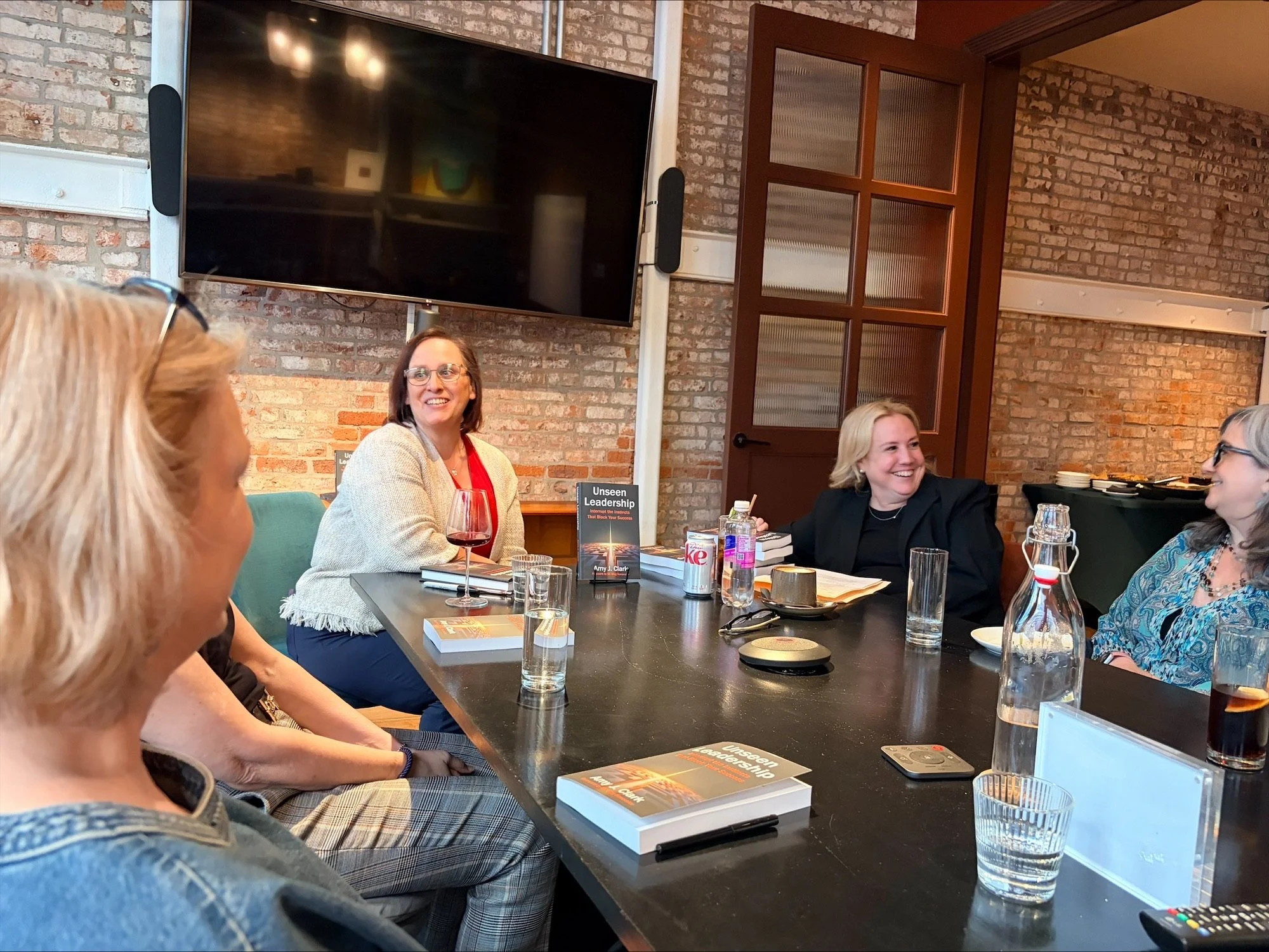
your speaker
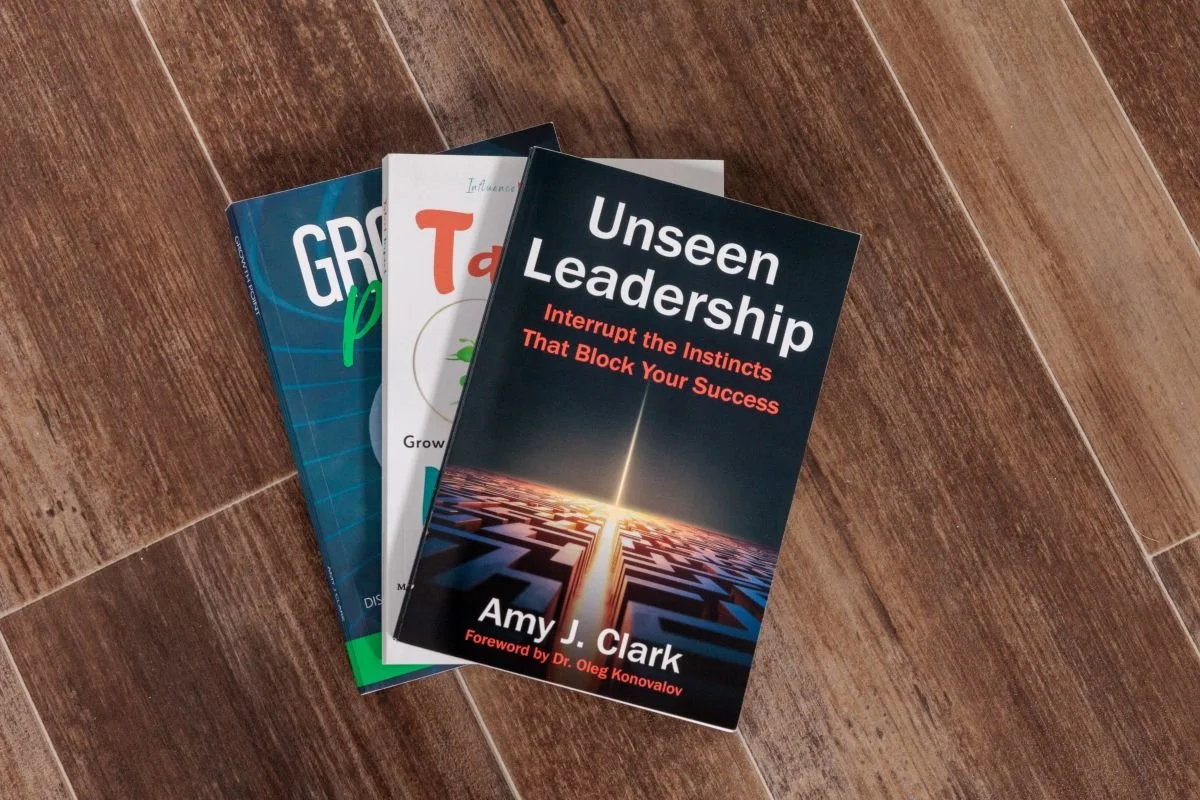
Amy J. Clark is a sitting Chief Human Resources Officer, an executive advisor, and the two-time bestselling author of Unseen Leadership: Interrupt the Instincts That Block Your Success.
The distinction that matters for your room: she is not a former executive describing the seat from memory. She is in it this week, carrying the same conditions your audience is carrying, which is why the examples are current and why nobody in the room gets to file it under theory.
She built CARE, the framework the experience runs on. Twenty years in Fortune 500 and enterprise leadership. A certified executive coach through Marshall Goldsmith Stakeholder Centered Coaching, a Visionary Leadership Master Coach trained by Dr. Oleg Konovalov, and the exclusive Licensed Partner of the Visionary Leadership Institute for the United States.
No standard deck. The room is built from your audience's own Activator data, your industry, and what your organization is walking into this year.
Build leaders for the business you are becoming, not the one you have been.
Contact us today to book Amy for your next conference, or leadership event.
Not booking yet? See your own pattern first. CARE Leadership Activator® takes fifteen minutes.